
CASH FLOW & WORKING CAPITAL | LUXEMBOURG
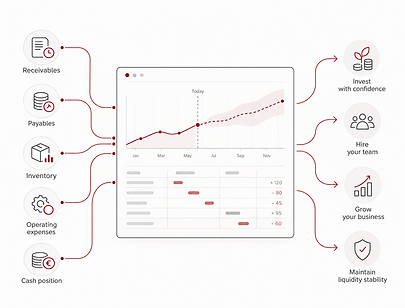
Do you have enough visibility on cash to make the right decisions?
Cash Flow & Working Capital | Visibility & Decision Support
Cash pressure is not always a profitability issue. It can result from slow collections, payment timing, working capital pressure, unexpected costs or insufficient forward visibility.
RedWatch helps business owners understand their current cash position, anticipate future needs and identify the operational levers that can strengthen liquidity.
THE QUESTIONS BUSINESS OWNERS NEED TO ANSWER
Good decisions start with clear visibility.
For many business owners, the challenge is not a lack of information, it is knowing what the numbers mean for the decisions ahead. Cash visibility helps answer the practical questions that matter most.
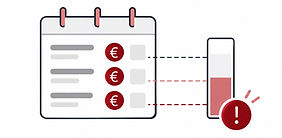
Can I meet my financial commitments?
Do I have enough visibility on upcoming cash inflows and outflows to anticipate pressure?
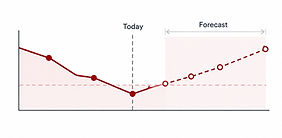
What will my cash position look like in the months ahead?
Can I identify periods where liquidity may become tight before they occur?
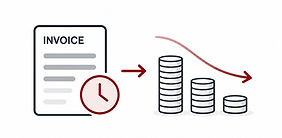
Are customer payments putting pressure on cash?
Are overdue receivables or slow collections creating avoidable working capital needs?
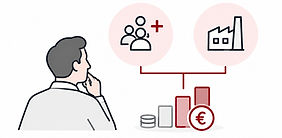
Can I afford to hire or invest?
Do future cash flows support the decision without putting day-to-day liquidity at risk?
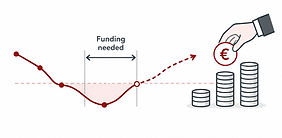
Do I need additional financing?
Can I identify the amount, timing and duration of a potential funding requirement early enough to act?
FROM CASH VISIBILITY TO BETTER DECISIONS
A cash forecast is useful only if it helps you anticipate and decide.
Good cash management is not about looking only at today’s bank balance. It means understanding what will come in, what will go out, when pressure may arise and which decisions can be taken before liquidity becomes constrained.


Know your starting point
Look ahead
Identify pressure points
Test decisions before acting
Understand the current cash position, receivables, payables and short-term commitments.
Build a realistic 3-, 6- or 12-month view of expected cash inflows and outflows.
Highlight periods where collections, investments, taxes, payroll or other commitments may create liquidity tension.
Assess the cash impact of hiring, investing, changing payment terms or taking on additional financing.
Visibility creates time — time creates options
WHERE CASH PRESSURE BUILDS
Cash pressure often comes from timing mismatches, not only from poor profitability.
A business can be profitable and still face liquidity pressure when cash inflows and outflows do not occur at the same time. Understanding where these gaps come from is essential to anticipate them before they become critical.


Cash remains tied up when customers pay late, disputes delay collection or invoices take longer than expected to convert into cash.
Slow customer payments
Payment timing mismatch
Supplier payments, payroll, taxes and other commitments can fall due before customer cash is collected.
Customer payments often include VAT that will later have to be paid to the tax authorities. If that cash is absorbed by day-to-day operations, the VAT due date can create sudden liquidity pressure.
VAT becoming due
Working capital pressure
Inventory, deposits, prepaid expenses or rapid growth can absorb cash before revenue is converted into available liquidity.
Unexpected cash outflows
Repairs, investments, tax adjustments or other non-routine expenses can create pressure when they have not been anticipated.
Cash received is not always cash available to spend.
BUSINESS CASE | WHEN CASH PRESSURE REVEALS A DEEPER ISSUE
A cash problem is sometimes the symptom, not the root cause.
A Luxembourg service-sector SME with around €800k in revenue and 40 employees was facing recurring cash pressure. Part of the VAT collected from customers was being used to finance day-to-day operations, making VAT due dates particularly sensitive.
The initial issue appeared to be one of liquidity. But a deeper review showed that the underlying problem was broader. Profitability was distorted by an accounting error, pricing was largely driven by competitors rather than by the company’s own cost structure, and the different activities were generating very different levels of profitability.
The work therefore went beyond short-term cash management. Pricing was reviewed, the most profitable activities were prioritised, unnecessary costs were reduced, selected contracts were renegotiated and greater visibility was introduced around both profitability and cash.
The result was a much stronger financial position: revenue increased by around 30%, and the business moved from a loss-making position to strong profitability.
CASE SNAPSHOT

COMPANY
Luxembourg SME | Services sector | c. €800k revenue | 40 employees

CHALLENGE
Recurring cash pressure
VAT due dates under tension

ROOT CAUSES
Accounting error
Weak pricing discipline
Uneven profitability

ACTIONS
Pricing review
Cost reduction
Contract renegotiation
Better cash visibility

OUTCOME
+30% revenue
From losses to profitability

LESSON : Cash pressure can reveal deeper business issues.