
BILLING & COLLECTIONS | LUXEMBOURG
Are your invoices issued correctly — and converted into cash without unnecessary friction?
Wrong contact
Billing error
Billing & Collections | Invoice-to-Cash
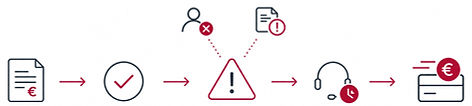
Invoice
Create & send
Validation
Check & approve
Issue / Dispute
Investigate & resolve
Collection
Follow up & engage
Cash received
Payment received
An overdue invoice is not always a collection problem. Payment can be delayed by incorrect customer data, missing purchase orders, billing errors, unresolved disputes or unclear approval processes. RedWatch helps organisations identify the root causes behind delayed payments, remove operational bottlenecks and strengthen the invoice-to-cash process.
WHY INVOICES REMAIN UNPAID?
An overdue invoice is not always the result of a customer unwilling to pay.
In many cases, payment is delayed by internal process issues that prevent the invoice from being approved or processed correctly.

Wrong contact
The invoice is sent to a person who is not responsible for approval or payment.

Missing or incorrect PO
The purchase order is absent, incorrect or does not match the relevant department or service.

Billing error
Incorrect fees, amounts, dates or billing rules can prevent the invoice from being approved.

Missing supporting documents
The customer may require additional documents before the invoice can be validated for payment.

Unresolved dispute
A commercial or operational issue remains open and blocks the payment process.

Unclear approval workflow
The invoice enters a complex internal validation process without clear ownership or follow-up.
SIGNS OF FRICTION IN THE INVOICE-TO-CASH PROCESS
Internal billing and collection issues often become visible through recurring operational symptoms.
In isolation, each issue may seem minor. Repeated over time, however, they can delay cash collection and consume significant management attention.
Frequent invoice corrections
Repeated credit notes, reissues or manual adjustments suggest weaknesses upstream in the billing process.
Recurring customer disputes
The same billing questions or disagreements reappear because the root cause has not been addressed.
Increasing overdue balances
Receivables accumulate even though collection activity is taking place.
Worsening ageing
More invoices progressively move into older overdue buckets instead of being resolved quickly.
Heavy reliance on manual trackers
Teams depend on spreadsheets, emails or individual follow-up to understand what is blocking payment.
Repeated internal escalation
Finance, Operations, Sales or Relationship Management repeatedly need to intervene to unblock invoices.
FROM FRICTION TO RESOLUTION
Improving collections is not simply about increasing the number of reminders.
Sustainable improvement comes from identifying the root cause of delayed payments, correcting upstream issues and creating clear ownership throughout the invoice-to-cash process.
01

02

03

04

Identify the cause
Understand why the invoice is not being paid before deciding how to act.
Remove the blockage
Correct billing data, purchase orders, supporting documents, disputes or approval issues preventing payment.
Clarify ownership
Define clear responsibilities across Finance, Operations, Sales or Relationship Management so that issues are resolved without unnecessary delay.
Structure the follow-up
Use clear priorities, documented actions and regular follow-up until the issue is resolved and payment is received.
WHEN COLLECTION IS NOT REALLY A COLLECTION ISSUE
Sometimes, a payment delay can be resolved by understanding what is actually blocking the invoice — rather than by sending another reminder.
Wrong recipient
A client contacted RedWatch regarding an overdue invoice. A direct discussion with the customer’s Finance Director quickly showed that the invoice had simply been sent to the wrong contact. The issue was operational rather than financial.
Incorrect purchase order
In another case, invoices remained unpaid because the Purchase Order referenced did not match the PO required by the relevant customer department. Once the billing requirement was understood, the blockage could be addressed at source and the payment process could move forward.
Effective collection starts by understanding why an invoice is not being paid.
WHAT A CONTROLLED INVOICE-TO-CASH PROCESS LOOKS LIKE
Effective Billing & Collections relies on more than accurate invoicing or regular reminders.
It requires clear ownership, disciplined follow-up and sufficient visibility to identify recurring issues before they continue to delay cash collection.

Billing readiness
Right data before invoicing
Customer data, billing requirements, purchase orders and supporting documents are checked before invoices are issued.

Clear ownership
Defined responsibilities
Responsibility for resolving billing issues, disputes and payment blockers is clearly defined across the relevant teams.

Structured follow-up
Priority-based actions
Overdue items are prioritised, actions are documented and follow-up is adapted to the reason behind the delayed payment.

Visibility & insight
Recurring issues monitored
Ageing, disputes and recurring causes of non-payment are monitored to identify where the invoice-to-cash process needs to improve.
MEASURING WHAT MATTERS
The right KPIs help reveal where cash gets stuck
Good invoice-to-cash management requires more than tracking overdue balances. The right indicators help show where cash is getting stuck, whether issues are being resolved and whether collection actions are actually working.
Collection Efficiency Index
How effectively are outstanding receivables being converted into cash?
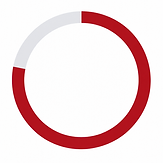
COLLECTION EFFICIENCY
FORMULA
Collections ÷ Outstanding receivables
Tracked over time, the CEI helps measure collection effectiveness, identify deterioration and assess whether process improvements are delivering results.

TURNING INSIGHT INTO STRONGER CASH FLOW

Aged receivables
Where overdue balances are accumulating - and whether they are concentrated in a few large accounts.
Dispute ageing
How long do billing disputes or operational blockers remain unresolved - and where delays tend to persist.

FREQUENTLY ASKED QUESTIONS
Why can an invoice remain unpaid even when there is no credit issue?
Because payment may be blocked by incorrect customer data, missing purchase orders, billing errors, unresolved disputes or unclear approval workflows.
What is the difference between Billing & Collections and Credit Management?
Billing & Collections focuses on operational issues that can prevent invoices from being processed and paid. Credit Management focuses more broadly on customer risk, exposure and the evolution of creditworthiness.
When should a company review its invoice-to-cash process?
A review can be useful when invoice corrections, disputes, overdue balances or internal escalations become recurrent.
Which indicators are most useful for monitoring collections?
The relevant indicators depend on the environment, but aged receivables, dispute ageing and collection effectiveness can help identify where cash is getting stuck.
Can better collection performance start before an invoice becomes overdue?
Yes. Checking billing requirements, purchase orders, supporting documents and customer approval processes before invoicing can prevent avoidable payment delays.